
 Chinese
  English
 Espa?ol
 Русский
 Current position:Home > News & Events > News
Nitrifying Biological Filtration: Key Insights into Media and Specific Surface Area
Nitrifying Biological Filtration: Key Insights into Media and Specific Surface Area
In the realm of water treatment and aquaculture, nitrifying biological filtration plays a pivotal role in maintaining water quality by converting harmful ammonia into less toxic nitrates. Central to this process are the filtration media and their specific surface area (SSA), a critical factor influencing microbial colonization and reaction efficiency. Below, we explore the nuances between specific surface area and effective specific surface area, and how to optimize media performance.
Specific Surface Area vs. Effective Specific Surface Area
Understanding the distinction between these two concepts is key to enhancing filtration system design:
1. Small Particles: Size and Effective Surface Area
For granular media composed of small particles, a fundamental principle applies: smaller particle size correlates with a larger specific surface area. Unlike porous materials, the entire surface of these particles is readily accessible to water flow and microbial communities, making nearly all of their surface area effective for biofilm formation and biochemical reactions. This direct accessibility simplifies mass transfer, ensuring efficient contact between ammonia, oxygen, and nitrifying bacteria.
2. Porous Materials: Enhancing Internal Surface Utility
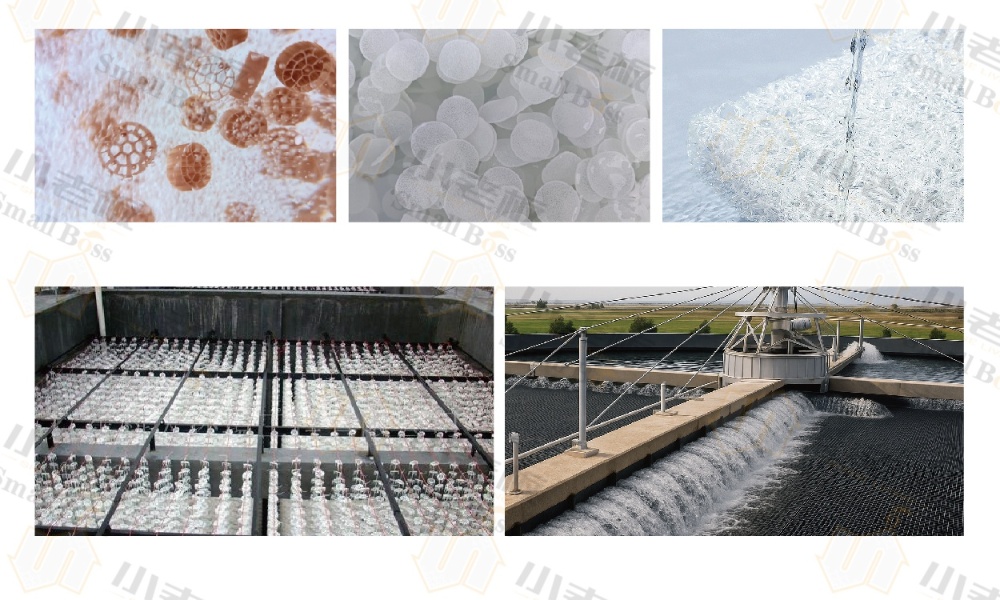
Porous filtration media, while offering vast internal surface areas, require deliberate design to maximize effective specific surface area. The challenge lies in ensuring that dissolved oxygen, ammonia-nitrogen, and other reactants can penetrate deep into the pores to support aerobic nitrification. Key considerations include:
Flow Dynamics: Promoting consistent water circulation through the media to prevent stagnation. Poor fluidity not only limits reactant access but can create anaerobic microenvironments, leading to undesirable side effects like sulfide production (manifested as blackening or foul odors) and reduced nitrification efficiency.
Pore Structure Optimization: Balancing pore size and connectivity to enhance mass transfer while avoiding excessive pressure drop or clogging.
3. Enhancing Mass Transfer Between Biofilm and Water
Effective nitrification depends on efficient mass transfer across the biofilm-water interface. Strategies to improve this include:
Convective Flow Enhancement: Designing systems that promote gentle, controlled water movement to increase contact between bulk water and biofilm surfaces. This approach boosts convective mass transfer without relying on energy-intensive turbulent mixing, which can damage biofilms or elevate operational costs.
Shear Stress Management: Maintaining optimal flow velocities to ensure steady substrate delivery while preventing excessive biofilm detachment.
4. Mitigating Dead Zones in Biofilter Media
Dead zones—areas of stagnant water within the filter bed—are prime locations for anaerobic activity, which can degrade water quality and disrupt nitrification. To avoid these issues:
Media Selection: Choose materials with uniform particle size distribution and stable geometry to minimize voids and channels that trap stagnant water.
Bed Design: Ensure proper flow distribution through strategic inlet/outlet configurations and avoid overloading the system, which can compact media and create low-flow regions.
Key Takeaways for Optimal Media Performance
Particle Size Matters: Smaller particles offer inherently higher effective surface area, ideal for systems prioritizing immediate reactivity.
Porous Media Require Design Intent: Focus on fluid dynamics and pore accessibility to convert theoretical surface area into functional nitrification capacity.
Balance Flow and Energy Use: Prioritize convective mass transfer techniques that enhance efficiency without excessive energy consumption.
Dead Zone Prevention: Regular maintenance and thoughtful media/systems design are critical to sustaining aerobic conditions throughout the filter bed.
By addressing these factors, engineers and aquaculture professionals can optimize nitrifying biological filtration systems for improved performance, reliability, and cost-effectiveness.