
 Chinese
  English
 Espa?ol
 Русский
 Current position:Home > News & Events > News
Freshwater Ozone Placement Guide: Front vs Rear Port Advantages and Scientific Application
Freshwater Ozone Placement Guide: Front vs Rear Port Advantages and Scientific Application
1. Port One: Placement in Front of Biochemical Tank
Core Advantages and Mechanism
Addressing User Concerns: Though worries exist that ozone residue might affect nitrifying bacteria, its impact on the nitrifying bacteria membrane is minimal.
Physical Filtration Connection: The biochemical tank’s front typically links to a microfilter (e.g., 300 - mesh fine filter) or fixed bed. Dissolved, slightly soluble, or colloidal organic matter still enters.
Dual Treatment Effect:
Organic Matter Digestion: Ozone decomposes fine particles and residual organic matter, reducing biochemical tank load.
Oxygenation & Reaction Optimization: Residual ozone enters the biochemical tank with water. Continuous aeration extends residence time, preferentially oxidizing biofilm - adsorbed organic matter while boosting water oxygenation.
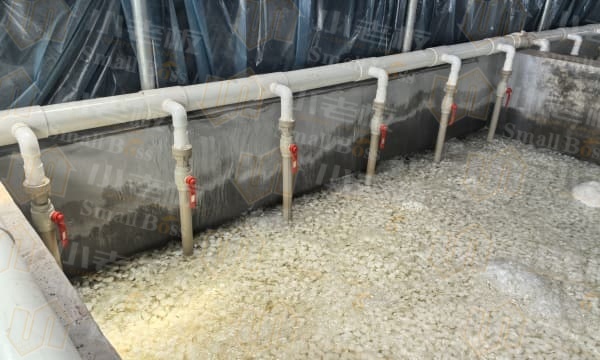
2. Port Two: Placement Behind Biochemical Tank
Key Functions and Precautions
Treatment Objective: Targets organic debris adsorbed on packing during biochemical treatment and shed over time, enabling timely decomposition via rear - end ozone oxidation.
Additional Value: Ozone’s disinfection suppresses total water bacteria, creating a low - bacteria environment for aquaculture ponds.
Risk Control: To avoid ozone residue harming aquaculture organisms, core measures include:
Extending water flow residence time in the reaction unit.
Carefully controlling ozone dosage to prevent over - addition.
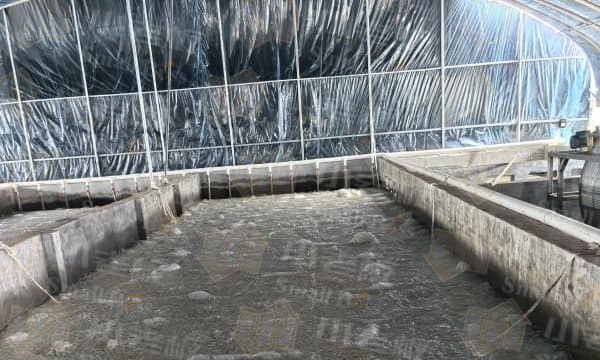
3. Decision - making Reference and Application Suggestions
Core Difference Comparison
| Placement Port | Core Advantages | Core Risks | Applicable Scenarios |
|---|---|---|---|
| Front Port | Macromolecular organic matter fragmentation, enhancing biochemical treatment efficiency | Need to verify nitrification system tolerance (actual impact is slight) | Systems with complex water quality and high organic matter load |
| Rear Port | Disinfection, bacteria control & fallen debris treatment | Strict residue control requirement | Scenarios with strict safety demands for aquaculture organisms |
Practice Principles
System Adaptation: Design comprehensively by integrating microfiltration precision, packing type, aeration intensity, and other equipment parameters.
Dynamic Debugging: Optimize ozone dosage via water quality monitoring (e.g., COD, TOC indicators). Prioritize degradation efficiency at the front and residue control at the rear.
Safety Redundancy: For rear - end placement, use a reaction tank or pipeline mixer with sufficient volume to ensure ozone fully reacts before entering the aquaculture area.